Back to School Coloring Pages 15 - KDP: A Strategic Asset for Your Coloring Book Business
In the competitive landscape of Amazon KDP publishing, a single well-prepared resource can determine whether a product launch gains traction or gets lost in the noise. Back to School Coloring Pages 15 - KDP is exactly that kind of asset—a ready-to-list collection that removes friction from the production cycle while offering a thematic hook that resonates with a broad, motivated audience. For entrepreneurs, creators, and small business owners operating in the low-content and medium-content publishing space, understanding what this package represents and how to deploy it strategically can mean the difference between random listing attempts and a coherent, scalable product line.
This article examines the practical value of Back to School Coloring Pages 15 - KDP from a decision-making perspective. We will explore its role in goal setting, workflow planning, brand positioning, and long-term business development. The focus is not on hype or generic encouragement but on grounded, actionable thinking that helps you use this resource deliberately rather than impulsively.
Understanding the Asset: What Back to School Coloring Pages 15 - KDP Offers
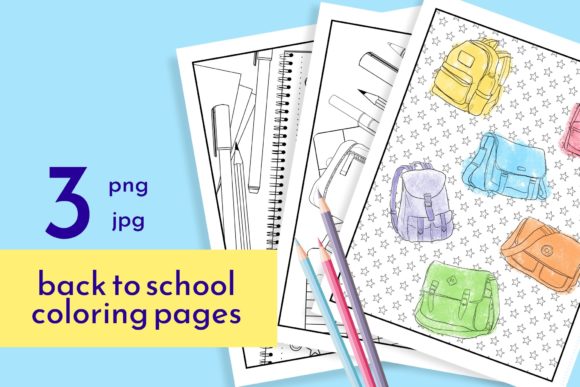
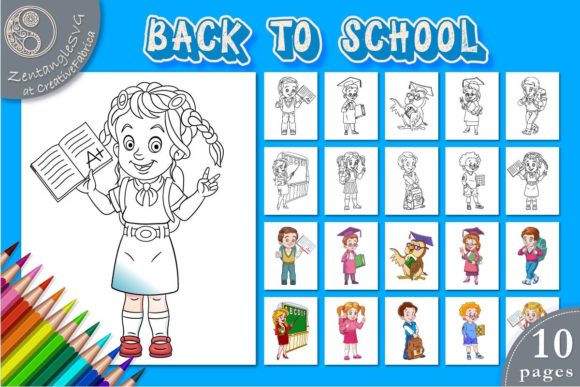
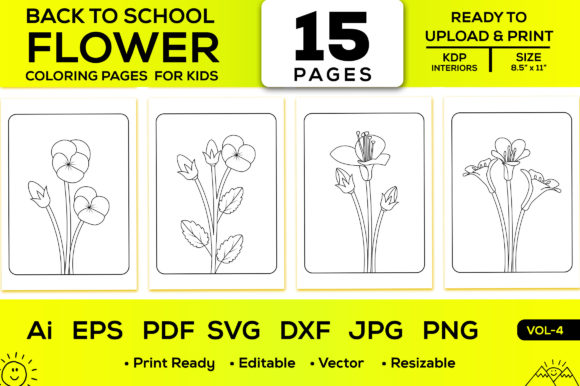
At its core, this product is a single PNG file containing 15 back-to-school-themed coloring pages, fully tested for compatibility with Amazon KDP. The testing aspect is critical—it means the file has been vetted for common upload issues such as resolution problems, margin inconsistencies, or bleed compliance. For a publisher, this removes a layer of technical uncertainty and allows you to focus on the strategic elements of listing optimization and market timing.
The "back to school" theme itself carries seasonal and evergreen appeal. While the back-to-school period peaks in late summer and early fall, the concept of education, learning tools, and classroom imagery holds year-round relevance for parents, teachers, homeschoolers, and even adults seeking nostalgic or stress-relief coloring activities. The 15-page count is manageable for a single listing, allowing you to bundle it as a standalone book or combine it with other themed sets to create larger volumes.
Strategically, this resource functions as a foundational building block. It is not a finished product in the sense of being a complete book with a cover, description, and marketing copy—but it provides the core content that you can wrap in your own branding, pricing strategy, and promotional approach. This distinction matters because it shifts your role from content creator to content assembler and marketer, which is often where the highest leverage lies in a KDP business.
Positioning and Branding Opportunities
For a publisher building a niche around educational or seasonal content, Back to School Coloring Pages 15 - KDP offers a coherent entry point. You can position it as a fun preparatory activity for children returning to class, a mindfulness tool for teachers, or a creative outlet for adults who enjoy academic-themed illustrations. Each positioning leads to a different audience segment and requires distinct listing copy, keyword targeting, and cover design choices.
The intentional publisher will map these positioning options against their existing catalog. If you already sell children's activity books, the back-to-school theme is a natural extension. If your brand leans toward adult relaxation coloring, you might emphasize the nostalgic or stress-relief angle. In either case, the resource saves you the time of designing original assets while giving you a consistent thematic anchor.
Operational Efficiency in Content Creation
One of the most underestimated challenges in KDP publishing is the time cost of creating high-quality, print-ready content. Designing 15 unique coloring pages from scratch, ensuring they meet Amazon's technical specifications, and testing them for common errors can take several days of concentrated work. Back to School Coloring Pages 15 - KDP compresses that timeline to essentially zero, allowing you to move directly to the listing and marketing phases.
This operational efficiency is especially valuable if you are testing a new niche or experimenting with seasonal content. Instead of committing weeks to a full design process, you can launch a listing, gauge customer response, and iterate based on real data. This iterative approach reduces sunk costs and helps you make faster decisions about where to allocate your creative energy.
Timing Your Release for Maximum Impact
The most obvious window for this product is the back-to-school season, which typically runs from mid-July through September in the United States. Amazon's algorithm tends to surface seasonal content more prominently during these weeks, and search volume for terms like "back to school coloring book" rises predictably. However, a purely seasonal approach carries risk: if your listing does not gain traction quickly, you may miss the window entirely, and the product could sit idle for another year.
A more robust strategy involves launching the listing early—perhaps in late spring—and using the intervening months to build reviews, optimize keywords, and establish organic ranking. By the time peak season arrives, your product has accumulated social proof and algorithmic favor. This approach requires patience but aligns with how Amazon's search and recommendation systems actually work.
Approaches to Customization and Differentiation
Because Back to School Coloring Pages 15 - KDP is delivered as a PNG file, you have flexibility in how you present it. You can create your own cover design that matches your brand aesthetic, write a unique product description that speaks to your target audience, and set a pricing strategy that reflects your positioning. The content itself is fixed, but every other element of the listing is yours to control.
Differentiation is critical when multiple publishers use the same underlying resource. Consider adding bonus content such as a sample page preview, a table of contents, or a short introduction that frames the activity. You might also bundle this 15-page set with other themed collections to create a 60- or 100-page book that feels more substantial and offers higher perceived value. Bundling also reduces the likelihood that customers will compare your listing directly with others using the same source material.
Practical Examples and Planning Considerations
Imagine you run a small publishing brand focused on educational resources for homeschool families. You have a modest catalog of math workbooks and reading logs, and you want to expand into activity-based products. Back to School Coloring Pages 15 - KDP offers a low-risk entry point: you can create a listing, price it at $5.99, and test whether your existing audience responds to coloring content. If the product sells, you can commission a larger original set for the following year, using the sales data to guide the design.
Alternatively, consider a creator who specializes in adult coloring books and wants to experiment with seasonal themes. Instead of investing weeks in a full back-to-school collection, you purchase this PNG file, create a sophisticated cover with muted colors and vintage classroom imagery, and position it as a nostalgia-driven relaxation tool for adults. The same content takes on a completely different brand voice and reaches a different customer base.
In both scenarios, the resource functions as a strategic test kit. It allows you to validate demand, build keyword rankings, and understand customer expectations without overcommitting resources. The data you gather from this initial launch can inform future product decisions—whether that means doubling down on seasonal content, adjusting your pricing model, or refining your cover design approach.
The Risks of Using Back to School Coloring Pages 15 - KDP Without Clear Intent
Any ready-made resource carries the risk of generic execution. If you upload the PNG file, slap on a generic cover, write a thin description, and launch without a clear target audience, you are essentially gambling that Amazon's algorithm will surface your listing over hundreds of similar products. That is a low-probability bet, and the outcome is often disappointing sales and wasted listing slots.
Another risk is pricing pressure. Because the barrier to entry is low, multiple sellers may launch comparable products using the same or similar resources, leading to a race to the bottom on price. If you compete solely on cost, you erode your margins and signal to Amazon that your product is a commodity rather than a differentiated offering. This dynamic is avoidable if you invest in unique branding, superior listing quality, and targeted marketing.
There is also the risk of context blindness—using the resource in a season or setting where it does not align with customer expectations. A back-to-school coloring book offered in December will likely underperform because the thematic relevance is weak. Understanding the natural lifecycle of the theme and planning your launch accordingly is essential to avoid wasted effort.
Using Back to School Coloring Pages 15 - KDP Intentionally
Intentional use starts with clarity about your business objectives. Ask yourself: Is this product meant to generate immediate revenue, build a keyword footprint, test a new niche, or fill a gap in your existing catalog? Each objective leads to different decisions about cover design, pricing, listing copy, and promotion. Without this clarity, you are reacting to market noise rather than executing a plan.
Next, consider the customer's journey. When someone searches for "back to school coloring book" on Amazon, they likely have a specific need—preparing a child for the school transition, finding a quiet activity for a classroom, or seeking stress relief during a busy season. Your listing should speak directly to that need, using language that resonates with the intended user. Generic descriptions that could apply to any coloring book will not convert as well as targeted copy that addresses a specific pain point or aspiration.
Finally, treat the resource as a component in a larger system. A single 15-page coloring book is unlikely to build a sustainable business on its own, but it can be part of a portfolio of seasonal and evergreen titles that collectively generate consistent income. Plan how this product fits into your broader catalog strategy—whether as a loss leader, a traffic builder, or a complementary offering to larger books.
Long-Term Value and Decision-Making Guidance
The long-term value of Back to School Coloring Pages 15 - KDP is not in the file itself but in what you learn from the process of bringing it to market. Every listing you create teaches you something about keyword research, cover optimization, pricing psychology, and customer behavior. If you approach this product as a learning vehicle rather than a quick win, you extract compound returns that extend far beyond the initial sale.
For a seasoned publisher, this resource might represent a minor addition to an existing portfolio—a quick seasonal title to capture incremental traffic. For a newcomer, it could be the first real test of the KDP workflow, including file preparation, listing creation, review solicitation, and performance analysis. Either way, the decision to use this resource should be driven by a clear understanding of where you are in your business journey and what you need to accomplish next.
In practical terms, here is a decision framework you can apply: clarity, differentiation, timing, iteration. Be clear about your audience and objective. Differentiate your listing through branding and positioning. Time your launch to align with market demand. Iterate based on performance data rather than hoping for a different outcome. This framework is not specific to Back to School Coloring Pages 15 - KDP, but it is especially relevant when using a shared resource where execution quality determines success.
The most successful KDP publishers treat every product as a deliberate choice, not a random experiment. By approaching Back to School Coloring Pages 15 - KDP with a strategic mindset, you transform a simple PNG file into a lever for growth, learning, and customer engagement. That is the difference between merely listing a product and building a sustainable business around thoughtful content deployment.