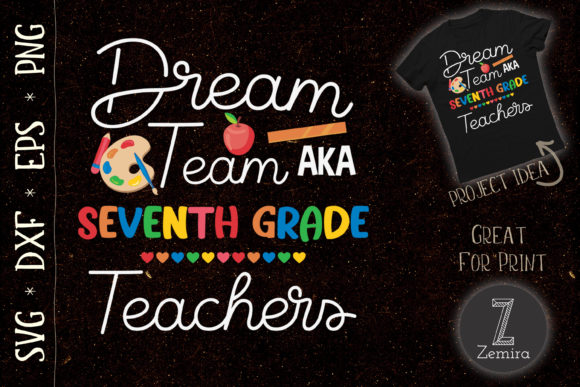
Dream Team Sixth Grade Back to School: Practical Design Assets for Back-to-School Projects
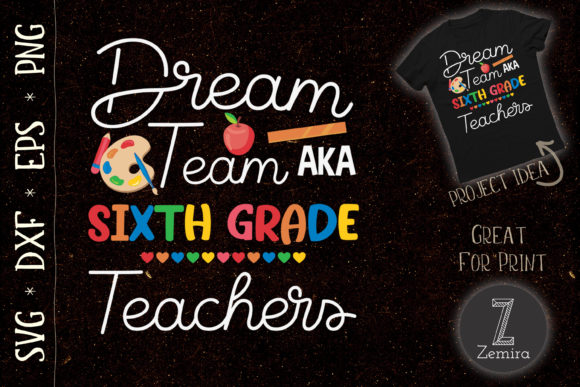
Back-to-school season is a busy period for creators, small business owners, and anyone who produces custom merchandise. Whether you are preparing a limited run of t-shirts for a school event, designing classroom gifts, or launching a small product line for September, having reliable design files is essential. The Dream Team Sixth Grade Back to School bundle provides exactly that: a set of clean, ready-to-use vector and raster files that can be dropped directly into your production workflow. This article covers what the bundle contains, how it fits into real creative and business processes, and practical ways to integrate it into your projects.
What the Dream Team Sixth Grade Back to School Design Bundle Includes
The bundle is built around a straightforward but important concept: giving you the file formats you actually need for different tools and production methods. It includes four file types, each selected for a specific role in the design-to-product pipeline.
- SVG file – Designed for use with Cricut Explore and Silhouette Designer Edition. This vector format scales cleanly and works well with cutting machines that read vector paths for blade or laser cutting.
- DXF file – Intended for Silhouette users, especially those running the free basic version of Silhouette Studio. DXF is a widely supported exchange format that can be imported into many CAD and design applications.
- EPS file – Suitable for Adobe Illustrator, Corel Draw, and Inkscape. EPS preserves vector data and is a standard choice for professional print design and further editing.
- PNG file – A high-resolution image at 300 DPI with a transparent background. This is the go-to format for printing on t-shirts, mugs, cushions, key holders, cards, and similar items where a raster image with crisp edges is needed.
Having all four formats means you can move between machines and software without needing to convert files yourself. This reduces preparation time and minimises the risk of format incompatibility halfway through a production run.
Where This Bundle Fits in Your Back-to-School Workflow
The Dream Team Sixth Grade Back to School assets can be used at different stages of a project, depending on your role and whether you are producing items for yourself, for customers, or for a school community.
Before Production: Planning and File Preparation
If you are a small business owner or a freelance creator, your workflow typically begins with design selection and file checking. The bundle eliminates the need to create artwork from scratch. You can open the EPS or SVG file in your vector editor, review the design, and make any necessary size adjustments before moving to production. Because the files are provided in multiple formats, you can test compatibility with your particular cutting machine or print provider early in the process. This saves time and avoids the frustration of discovering a format mismatch after you have already started cutting or printing.
During Production: Cutting, Printing, and Assembly
When you are ready to produce, the file choice depends on your equipment. For vinyl cutting with a Cricut or Silhouette, the SVG or DXF file is typically the best option. Import the file directly into your design software, check the cut lines, and set your material type. The vector nature of SVG and DXF ensures clean edges and consistent sizing across multiple copies. For direct-to-garment printing, sublimation, or heat transfer, the PNG file with its transparent background is ideal. The 300 DPI resolution provides enough detail for most apparel and accessory sizes, and the transparent background simplifies layering on coloured substrates.
After Production: Quality Control and Consistency
Once items are produced, you can use the vector files as reference for quality checks. For example, if you are printing a batch of mugs or key holders, you can compare the finished product against the original EPS or PNG to confirm colour alignment, scaling, and placement. This is especially useful when producing multiple product types from the same design, as it helps maintain a consistent brand or theme across your entire back-to-school offering.
Practical Use Cases for Creators and Small Business Owners
The bundle is versatile enough to support a range of common back-to-school projects. Here are several realistic applications.
Apparel: T-Shirts and Hoodies
T-shirts remain the most popular back-to-school item for class groups, teams, and school events. Use the PNG file for screen printing or heat press transfers. The transparent background allows you to place the design on any colour garment without a white box. If you are using a vinyl cutter, the SVG or DXF file lets you cut heat-transfer vinyl in a single colour or layered colours, depending on the design complexity.
Drinkware: Mugs and Cups
For sublimation or UV printing on mugs, the PNG file works well. Its resolution is sufficient for cylindrical surfaces, and the transparent background helps the design wrap cleanly around the mug. You can scale the design to fit standard 11oz or 15oz mugs without losing sharpness.
Accessories: Cushions, Key Holders, and Cards
Fabric cushions and key holders can be produced using heat transfer or sewing methods. The SVG and DXF files are useful for cutting fabric appliqués or for use with embroidery digitising software. Cards and stationery items benefit from the EPS file, which can be placed into a greeting card template and printed in bulk. Because the design is vector-based, you can resize it for small tags or large wall prints without quality loss.
Integrating the Files with Your Design Software and Tools
One of the strengths of this bundle is that it works with the most common design and production tools used by small-scale creators. Understanding how each file type interacts with your software helps you choose the right format from the start.
- Cricut Design Space: Upload the SVG file directly. The software scales it automatically, and you can adjust the size within the canvas. Use the DXF file if you are working with an older version of Cricut software that prefers DXF import.
- Silhouette Studio: The DXF file is the recommended choice for the free version of Silhouette Studio. Users of the Designer Edition can also import SVG files. Both formats allow you to adjust cut lines and material settings.
- Adobe Illustrator and Corel Draw: The EPS file opens natively in both applications. You can edit paths, change colours, and combine the design with other elements. This is useful if you want to create variations of the design for different products.
- Inkscape: Inkscape handles SVG and EPS files well. Use the SVG format for a straightforward import experience. EPS files may require the Ghostscript extension for full compatibility.
- Print-on-demand platforms: For services like Printful, Printify, or similar, the PNG file with transparent background is usually the quickest upload option. Check the platform’s resolution requirements, but 300 DPI at the intended print size is generally sufficient.
Tips for Preparation, Organization, and Quality Control
To get the most out of the Dream Team Sixth Grade Back to School bundle, a few practical steps can improve your efficiency and consistency.
- Create a project folder at the start of the season. Store all four file formats together, and label them clearly with the design name and format. This makes it easy to find the right file when you are working on multiple projects at once.
- Test cut or print a single sample before producing in bulk. Even with well-formatted files, variations in material thickness, blade sharpness, or printer calibration can affect the final result. A quick test saves materials and time.
- Check scaling in your software. Vector files are resolution-independent, but your cutting machine or print software may apply default scaling. Verify that the design is set to the dimensions you want before hitting start.
- Maintain colour consistency across product types. If you are producing t-shirts, mugs, and key holders with the same design, use the same source file (EPS or PNG) for colour reference. This reduces visible differences between product lines.
- Archive the files after the season ends. The design can be reused for future sixth-grade events, class reunions, or other school-related projects. Having the original files saved means you do not need to recreate artwork later.
Long-Term Value and Reusability
While the bundle is themed around back-to-school for sixth grade, the design assets themselves have a longer shelf life. School-related projects recur annually, and the same files can be used for multiple purposes across different years. For example, you can produce new batches of t-shirts each September without re-purchasing artwork. Additionally, because the files are vector-based, you can modify them for other grade levels or school events by editing the text or elements in your vector software. This reusability makes the bundle a practical investment for anyone who produces school merchandise regularly.
Final Observations on Using Dream Team Sixth Grade Back to School in Your Creative Work
The Dream Team Sixth Grade Back to School bundle addresses a common bottleneck in the production workflow: having the right file format for the right tool. By providing SVG, DXF, EPS, and PNG in one package, it reduces the time spent on file conversion and troubleshooting. For creators, small business owners, and educators who need to produce items for the back-to-school season, this allows you to focus on the actual production and delivery rather than technical file issues.
If you are planning a run of custom apparel, accessories, or stationery for sixth-grade students, this set of files gives you a solid starting point. The key is to match the format to your production method, test early, and keep your files organised so you can reuse them for future projects. With a clear workflow and the right assets, the back-to-school rush becomes a manageable and repeatable process.