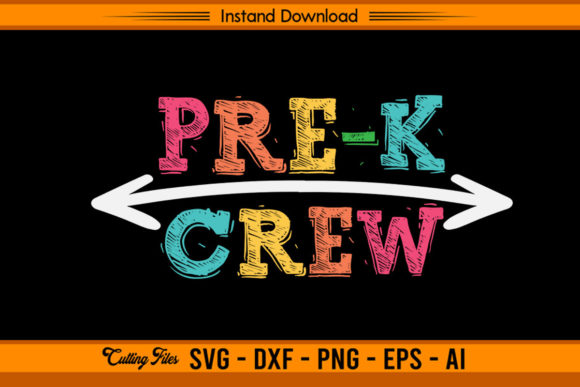
Pre-k Crew - Funny Back to School: Strategic Design Assets for Thoughtful Creators and Small Business Owners
When you are building a brand, launching a seasonal product line, or simply looking to create meaningful gifts for the little ones in your life, the assets you choose matter more than most people realize. The Pre-k Crew - Funny Back to School collection of SVG, PNG, AI, EPS, and DXF files offers a surprisingly versatile foundation for a range of strategic applications. But like any design resource, its real value depends on how thoughtfully you integrate it into your workflows, your brand voice, and your long-term goals.
This article is not a sales pitch. It is a practical examination of what these files are, why they might serve you well, and how to approach their use with intention. Whether you are a hobbyist looking to personalize gifts or a small business owner planning a back-to-school campaign, understanding the strategic dimensions of these ready-to-cut designs can help you make better decisions and achieve more consistent results.
What the Pre-k Crew - Funny Back to School Files Actually Offer
At first glance, this collection appears to be a simple set of illustrations for young children entering preschool. The designs carry a playful, humorous tone aimed at the pre-K crowd. But the practical utility extends far beyond the obvious. The purchase grants you immediate access to a zip folder containing five file formats: SVG, AI, EPS, PNG, and DXF. Each format serves a distinct purpose in the production pipeline, from vector editing to direct machine cutting.
Because the files are optimized for cutting machines such as Cricut and Silhouette, you can move from purchase to production in minutes. There is no physical product shipped. You download, unzip, and begin creating. This immediacy is not just convenient; it is strategically valuable for time-sensitive projects like back-to-school merchandise, event favors, or last-minute classroom gifts.
The absence of watermarks and the high resolution of the illustrations mean you are working with professional-grade assets. However, the presence of a polished file does not automatically translate into a polished outcome. The difference between a mediocre result and an exceptional one often lies in how you prepare, plan, and position your use of these designs.
Strategic Applications: Aligning Design Assets with Your Goals
One of the most common mistakes I see among creators and small business owners is treating design files as standalone products rather than components of a broader strategy. The Pre-k Crew - Funny Back to School files can support multiple objectives if you approach them with clarity about what you are trying to achieve.
Brand Positioning for Early Childhood Products
If you operate a business that serves parents, preschools, or daycare centers, the tone of your visual communications matters deeply. The humor in these files is gentle and age-appropriate, which makes it suitable for brands that want to convey warmth, playfulness, and relatability. Using these illustrations on t-shirts, tote bags, or mugs can reinforce a brand identity that feels approachable and fun without crossing into overstimulation or clutter.
For example, a daycare center might use the designs on staff t-shirts to create a cohesive, friendly image during drop-off and pick-up times. A small online shop selling preschool-themed gifts could use the PNG files for social media graphics or listing images, ensuring visual consistency across channels. The key is to ensure that the humor aligns with your brand voice and does not distract from your core messaging.
Planning a Seasonal Product Drop
Back-to-school season is one of the most predictable and profitable windows for creators who sell physical or digital goods. Having a set of ready-to-cut files allows you to plan a small product line without investing weeks in custom illustration. You can focus your energy on production, packaging, pricing, and marketing instead.
Consider mapping out a limited run of items: a few t-shirts in popular sizes, a set of matching hoodies, some decals for laptops or water bottles, and perhaps a mug design for teachers. By keeping the product range narrow and using a consistent visual theme, you reduce complexity and increase the likelihood that your inventory moves quickly. The Pre-k Crew - Funny Back to School files give you a coherent theme to build around, which simplifies decision-making and strengthens your offer.
Custom Gifts with Personal Meaning
For individuals, these files open up a world of personalized gifting that feels thoughtful rather than generic. A grandparent might create a custom hoodie for a grandchild starting preschool. A parent might make a matching sibling set for first-day photos. An aunt might design a tote bag filled with small school supplies, all featuring the same playful illustrations.
The emotional resonance of a handmade or customized gift is difficult to replicate with mass-produced items. When you invest time in selecting a design, preparing the material, and applying it with care, the recipient perceives that effort. The result is a gift that carries more meaning and often becomes a keepsake.
Practical Considerations Before You Start Cutting
Jumping straight into production without a clear plan is one of the fastest ways to waste materials, time, and money. Before you load your cutting machine, take a moment to evaluate a few key factors that will influence your outcomes.
Material Selection and Compatibility
Not all materials work equally well with intricate designs. The Pre-k Crew - Funny Back to School files contain detailed illustrations that may require careful weeding, especially if you are working with vinyl or heat transfer material. Test a small cut on a scrap piece first to understand how the design behaves. Adjust your blade pressure, speed, and material settings based on the results rather than relying on default configurations.
For fabric items like t-shirts and hoodies, consider the fabric type and color. Light-colored garments often work best with standard heat transfer vinyl, while dark fabrics may require a printable transfer paper or a white underlay. If you are printing on mugs or phone cases, verify that your sublimation or adhesive materials are compatible with the surface.
Sizing and Placement
One of the most overlooked aspects of applying designs to apparel is placement. A design that looks balanced on a flat screen may feel off-center or too large when applied to a curved or textured surface. Use a placement tool or a simple paper template to test the position before committing to the transfer. For children's clothing, remember that smaller sizes require proportionally smaller designs to avoid overwhelming the garment.
The files you receive are scalable, but scaling too far beyond their intended resolution can introduce pixelation or distortion, particularly for the PNG version. Stick to reasonable scaling ranges and always preview the result in your design software before exporting for cutting.
File Format Workflow
Understanding which file format to use for which step of your workflow saves time and reduces errors. The SVG file is generally the best choice for cutting machines because it preserves vector paths and allows for clean separation of colors and elements. The DXF file serves a similar purpose but may be preferred by users of specific software versions. The AI and EPS files are ideal if you want to edit the design in Adobe Illustrator or a compatible vector editor before cutting. The PNG file works well for print-on-demand services, digital mockups, or social media posts where a transparent background is needed.
Organize your files in clearly labeled folders on your computer so you can access the correct version quickly. This may sound trivial, but when you are producing multiple items in a single session, small inefficiencies add up.
Risks of Using Design Files Without Clear Intent
It is easy to assume that having a high-quality design file guarantees a high-quality result. That assumption is often wrong. The risks of using these files without a clear strategy are real and worth naming explicitly.
Brand confusion is one of the most common issues. If you apply a playful preschool design to products that otherwise carry a serious or minimalist brand identity, the mismatch can confuse your audience. Customers may not articulate why something feels off, but they will sense a lack of coherence. Over time, that erosion of trust can weaken your brand.
Wasted materials are another risk. Cutting intricate designs without testing settings first can ruin vinyl sheets, fabric blanks, or transfer paper. The cost of materials adds up quickly, especially if you are producing at scale. A few failed attempts can eat into your margins before you sell a single item.
Missed opportunities arise when you use a versatile asset in only one narrow way. If you only ever apply these files to t-shirts, you may overlook the potential for decals, stickers, phone cases, or classroom decor. Each product format reaches a different segment of your audience and extends the lifespan of the design.
The antidote to these risks is intentionality. Before you open the zip folder, ask yourself: What am I trying to achieve? Who is the end user? What impression do I want this design to leave? Answering those questions honestly will guide your choices and reduce waste.
Long-Term Value: Building a Library of Reusable Assets
One of the most strategic moves you can make as a creator or small business owner is to treat every design file you acquire as a long-term asset rather than a one-use resource. The Pre-k Crew - Funny Back to School files can be revisited year after year with slight variations in color, sizing, or product format.
For example, you might use the designs in August for back-to-school merchandise, then revisit them in December for holiday gift sets aimed at preschool families. You could pair the illustrations with different typography or background elements to create fresh variations without starting from scratch. Each iteration builds on the previous one, creating a visual library that becomes easier to deploy over time.
Storing your files in a organized digital archive with clear naming conventions ensures that you can find and reuse them efficiently. Include notes about which materials, machines, and settings you used for each run. That documentation becomes a reference that saves you time and guesswork in future production cycles.
Decision-Making Guidance for Creators and Business Owners
If you are considering whether these files are right for your next project, here is a practical framework to guide your decision.
Evaluate your timeline. If you need to produce items within a week, the instant download and cutting-ready formats are a clear advantage. If you have months to plan, you might invest in custom illustrations instead. The choice depends on whether speed or uniqueness is your priority.
Assess your production volume. For small batches or one-off gifts, the convenience of ready-made files is hard to beat. For large-scale production where you need exclusive rights, you may want to commission original art. Understand that these files are available to other buyers, so your products will not be unique in the marketplace. That is acceptable for many use cases but worth acknowledging.
Consider your audience's expectations. Parents and teachers who appreciate humor and warmth will respond well to these designs. If your audience skews more formal or minimalist, the playful tone may feel out of place. Know your customers before you commit to a visual direction.
Plan for quality control. No matter how good the file is, your final product depends on your execution. Invest time in testing, refining your process, and inspecting each item before it reaches a customer. A poorly applied design reflects on your brand, not on the file provider.
Final Observations on Thoughtful Use
The Pre-k Crew - Funny Back to School SVG, PNG, AI, EPS, and DXF files represent a practical tool in a larger creative and commercial toolkit. Their value emerges not from the files themselves, but from how you integrate them into your planning, production, and branding efforts. When used with clear goals, careful preparation, and an eye for quality, they can save you time, reduce complexity, and help you deliver products that resonate with your intended audience.
The creators who get the most out of assets like these are not the ones who rush to cut the first design they see. They are the ones who pause, consider their objectives, test their assumptions, and execute with discipline. That approach separates random activity from purposeful creation, and it is the difference between a product that merely exists and one that genuinely connects.
Download your files, explore the possibilities, and then take the time to plan your first project with the same care you would apply to any other business or creative decision. The results will speak for themselves.